
Affiliate disclosure: The Course Navigator may earn a commission if you purchase through links on this page. We review course fit, format, buyer considerations, and practical use cases so you can decide whether a program is worth a closer look.
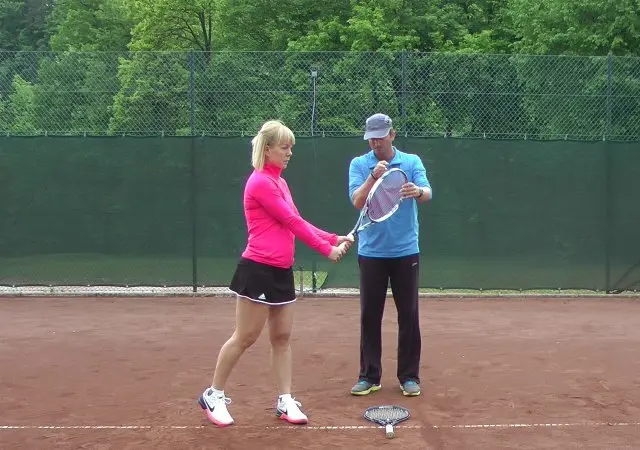
Feel Tennis is an online tennis instruction site with video courses focused on stroke technique, biomechanics, drills, serving, forehand and backhand development, and practical tennis improvement. The course library is aimed at recreational, intermediate, and advanced players who want clearer technical guidance outside private lessons.
Quick Verdict
Feel Tennis is best for players who already practice regularly and want detailed stroke instruction they can revisit between sessions. It is not a substitute for court time or live feedback from a coach, but it can be a useful technical companion if you want structured explanations for the forehand, serve, second serve, one-handed backhand, two-handed backhand, and other stroke mechanics.
| Best for | Recreational, intermediate, and improving advanced players who want video-based technical instruction. |
| Format | Online tennis video courses organized by stroke or topic. |
| Topics visible on the public page | Forehand, serve, second serve, one-handed backhand, two-handed backhand, biomechanics, drills, footwork, swing path, and mindset. |
| Public price signal | Several individual courses were listed at $97 when reviewed. |
| Main caution | Video instruction works best when paired with deliberate practice, recording your strokes, and feedback from a coach or hitting partner. |
What Feel Tennis Offers
The public course page organizes instruction by tennis strokes and player problems rather than presenting one generic course. That makes it easier to choose a focused path: a player struggling with power might start with forehand biomechanics, while a player losing confidence on service games might look at serve and second-serve training.
- Effortless Forehand: drills, biomechanics, racket-head speed, accuracy, swing path, checkpoints, and footwork.
- Serve Unlocked: modern serve technique, consistency, power, and step-by-step progressions.
- Second Serve Mastery: topspin serve, slice serve, consistency, pressure practice, and serve mindset.
- One-Handed Backhand: power generation, topspin, tension, movement, and backhand biomechanics.
- Two-Handed Backhand: rotation, hand coordination, grips, weight transfer, and body mechanics.
- Practical improvement: instruction is built around technical checkpoints and drills players can take to court.
Who Should Consider It
Feel Tennis makes sense for motivated players who enjoy technical learning and are willing to practice. If you already play weekly, record your strokes, take occasional lessons, or compete recreationally, video instruction can help you understand what to work on between court sessions.
It is less ideal for complete beginners who need help with grip, safety, court positioning, and basic movement in person. It is also not the best fit if you want a formal certification, coaching credential, or a structured fitness program. This is a skill-improvement resource for players, not a professional qualification.
Strengths
- Stroke-specific courses: learners can choose the exact part of their game they want to improve.
- Technical depth: the public page emphasizes biomechanics, swing path, body rotation, footwork, and checkpoints.
- Rewatchable format: video lessons can be revisited before or after practice sessions.
- Useful for self-coached players: the instruction can help players diagnose common flaws and plan drills.
- Good hobby expansion for The Course Navigator: it adds sports skill learning beyond coding, career, business, music, and certification content.
Watch-Outs Before Buying
- You still need court time: tennis technique changes through repetition, not passive watching.
- Live feedback matters: a coach can see issues that a video course cannot diagnose automatically.
- Choose one stroke first: buying multiple courses before practicing one can dilute your focus.
- Check current pricing: course prices and bundles can change, so confirm the latest offer before buying.
- Be realistic about level: some serve and advanced technique content may be more useful after you have basic fundamentals.
How to Use Feel Tennis Well
Pick one specific stroke problem and spend several weeks on it. Watch a lesson, write down one or two cues, practice on court, and record short clips to compare against the instruction. If possible, combine the course with periodic coach feedback so you can avoid practicing the wrong motion repeatedly.
Final Recommendation
Feel Tennis is worth considering for players who want detailed, rewatchable video instruction and are serious about deliberate practice. It is a strong fit for the site’s growing sports and hobby learning lane, especially for readers who want self-paced tennis improvement rather than a broad entertainment subscription.